
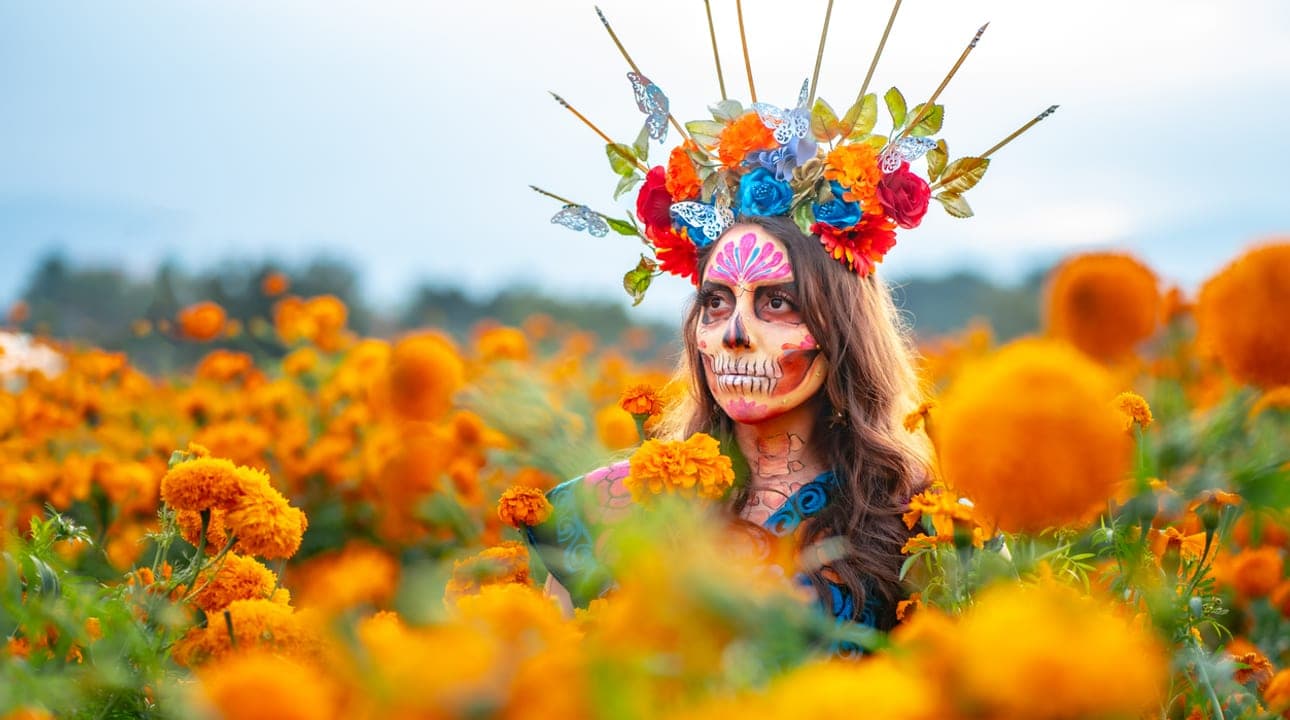
In November 2017, I sat in a dark movie theater with a heavy heart, clinging to my now-husband's arm, and watched Disney tell a story about my culture. It was the first time I truly understood Día de Muertos, even though I am Mexican.
Not every Latino grows up with the same traditions. Cultural identity can be inherited, adapted, rediscovered or reclaimed later in life, and for brands, that distinction matters more than any date on the calendar.
I grew up Mexican in Northern California, proud enough of my roots to throw a fit whenever relatives from Mexico teased that I was more American than Mexican. I held on to every moment I saw my culture reflected on me, whether on TV or movies, because I didn’t just see myself. I saw my mom, my cousins, and my tíos. But one tradition was never handed down to me. We had weddings, quinceañeras and every tradition in between, but death was the one topic we did not touch.
When Grief Arrived
The day I unpacked the U-Haul at my new apartment in Los Angeles, the phone rang. My eldest uncle passed away. I was 26, and it was the first time I had lost someone in my family. Nothing prepares you for it. I wasn't only mourning him. I was watching my mother, my grandmother and my tíos break, and feeling every bit of their pain on top of my own.
A year later, we lost my eldest cousin. My brother’s best man, the cousin that I admired and looked up to so much, was gone. Once again, I grieved for him and for the parents and siblings he left behind.
By the time Coco reached theaters, I was desperate for relief. What I found was my own family on screen: an Abuelita piling food on her grandson’s plate, a multigenerational household that holds its people close in life and even closer after. Coco gave us a language for something we had never known how to talk about.
Today our tradition is simple: sugar skulls, lively colors and Coco every year, with my mom and grandmother, who once could not talk about death, celebrating right alongside me. We didn’t inherit Día de Muertos. We rediscovered it and made it our own. Many of my Mexican friends found their own way back to it as adults. And the tradition kept traveling, reaching Latino families well beyond Mexican Americans. They saw their own households in it, and many have since made it their own.
More Than a Moment on the Calendar
That is my story as a niece and a cousin. Here is what I see as a marketer.
Brands are welcome to take part in Día de Muertos, as long as they take time to understand it. In a Collage Group survey cited by West Texas A&M’s College of Business, 32% of Hispanic consumers said all brands should celebrate Día de Muertos, and another 26% said only certain brands should. That second group is the one to listen to. Permission is earned, and it starts with knowing what the holiday means to the people who live it.
For years, that is not what we got. Every fall I watched the holiday show up on shelves as decoration: papel picado printed on sneakers, a skull on a chip bag. As a kid, I loved it. Any visibility felt like a win. As a marketer, I know visibility is only the starting line. Three brands show what the next step looks like.
Three Brands That Did the Work
Disney listened. Coco did not start smoothly. In 2013, Disney filed to trademark “Día de los Muertos,” and the Latino community answered loudly: You cannot trademark a cultural holiday. Disney withdrew the application and brought some of its critics, including cartoonist Lalo Alcaraz, inside as cultural consultants. The lesson isn’t that Disney stumbled, but that it listened, adapted, and created a film in which my family and so many others saw themselves in.
Doritos made room. In 2021, Doritos Mexico released “Nunca Es Tarde Para Ser Quien Eres,” an animated short in which a family visiting a grave meets the spirit of their Tío Alberto, and his partner, Mario. His elderly sister's response is pure joy that her brother is not alone. The chips are barely in it. Five years later, it still finds its way into feeds every fall, because it told LGBTQIA+ Latinos, who can feel left out of family holidays, that the tradition has room for them too.
Air Wick led with feeling. This year in Mexico, Air Wick launched “Aroma Eterno”, a limited collection in two scents: flor de cempasúchil and pan de muerto. The campaign asks: “What would happen if a scent could carry you home?” It says almost nothing about how an air freshener works. Instead, it tells the story of a mother who has lost her son. Set to “Amor Eterno,” the Rocío Dúrcal and Juan Gabriel classic that gives you chills from the first violin notes, the visual storytelling shows the power of scent and how we tie it to the people and memories we love.
The Marketing Lesson
None of these brands treated the holiday as a design theme or a quick sales opportunity. Each one started with the people who live it. That is the difference between borrowing a culture and belonging in it, and it comes down to three choices.
- Listen before you launch. Bring the community in early, and treat criticism as direction, not a crisis to manage.
- Sell the feeling, not the feature. Emotional connection builds the loyalty that product claims cannot. Nobody remembers the fragrance notes. They remember who the scent reminded them of.
- Know who is missing. Latino audiences are not one audience. Traditions shift across generations, countries of origin and identities, and the brands that notice who has been left out earn the deepest loyalty.
Not every brand will get Día de Muertos right the first time. Disney didn't. What matters is the work a brand is willing to do to understand the people on the other side of the message.
Remembering Out Loud
I walked into that theater carrying two losses and a tradition I had never been taught. I walked out with a way to keep my uncle and my cousin close, and a deeper appreciation for my beautiful culture.
That is what a brand is capable of when it does the work. Not a sale in the fourth quarter, but a place in someone's family story.
My uncle and my cousin may be visiting from another world now, but I have learned to turn the pain of grief into a celebration of their lives, and of the beautiful history of my Mexican roots. I am grateful that a film showed me grief can also be a story of love, family and hope. And as a marketer, I am hopeful, because the brands getting this right are proving that understanding and connecting with people is still the most powerful strategy we have.
Sources
- CNN: Disney withdraws Día de los Muertos trademark application
- ProfSpeak, West Texas A&M College of Business: Should Businesses Celebrate el Día de los Muertos?
- Motion Picture Association: After Years in the Making, Pixar's Coco Is Finally Here
- ABC7: Coco 2 officially in the works
- Adweek: Doritos' viral Día de Muertos ad celebrates LGBTQIA+ communities
- Queerty: Doritos Day of the Dead ad
- Mercado Negro: Air Wick “Aroma Eterno”